




FAQ
Do you have any questions about PROSINO size reduction machines? Here we list some frequently asked questions below for your easy reference. If you have further questions about our shredders, granulators and parts replacements, please send us an email or just give us a call. We are already ready for service.
✅ Get Quote | Download Brochure | Ask Engineer | Video Demo
After shredding or granulating, proper material collection is critical for efficiency, cleanliness, and downstream processing. The best solution depends on material type, particle size, output volume, and automation level.
Here are the most common collection systems used in shredding & granulation lines:
🗑️ 1. Collection Bin / Container /Trolley (Basic Solution)
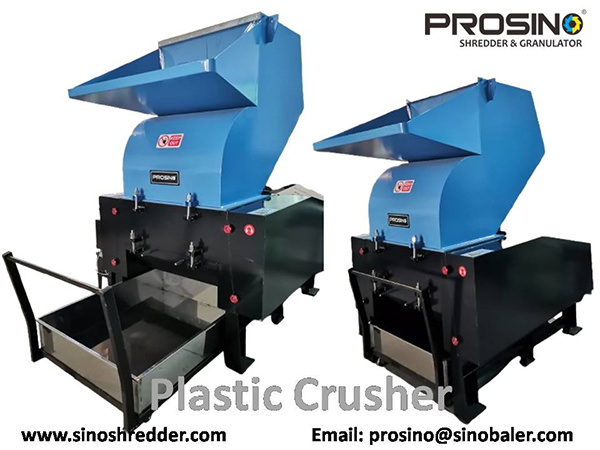
How it works
- Material falls directly from the discharge outlet into a bin, container, bag, or trolley.
- Operators remove and replace containers manually.
Best for
- Small granulators
- Low output volume
- Batch processing
- Budget installations
Advantages
✅ Lowest cost
✅ Easy installation
✅ No additional equipment required
Limitations
❌ Manual handling required
❌ Dust exposure possible
❌ Not suitable for continuous production
👉 Common in mini granulators, lab machines, and small recycling workshops.
🌪️ 2. Cyclone Collecting System (Most Popular Industrial Choice)


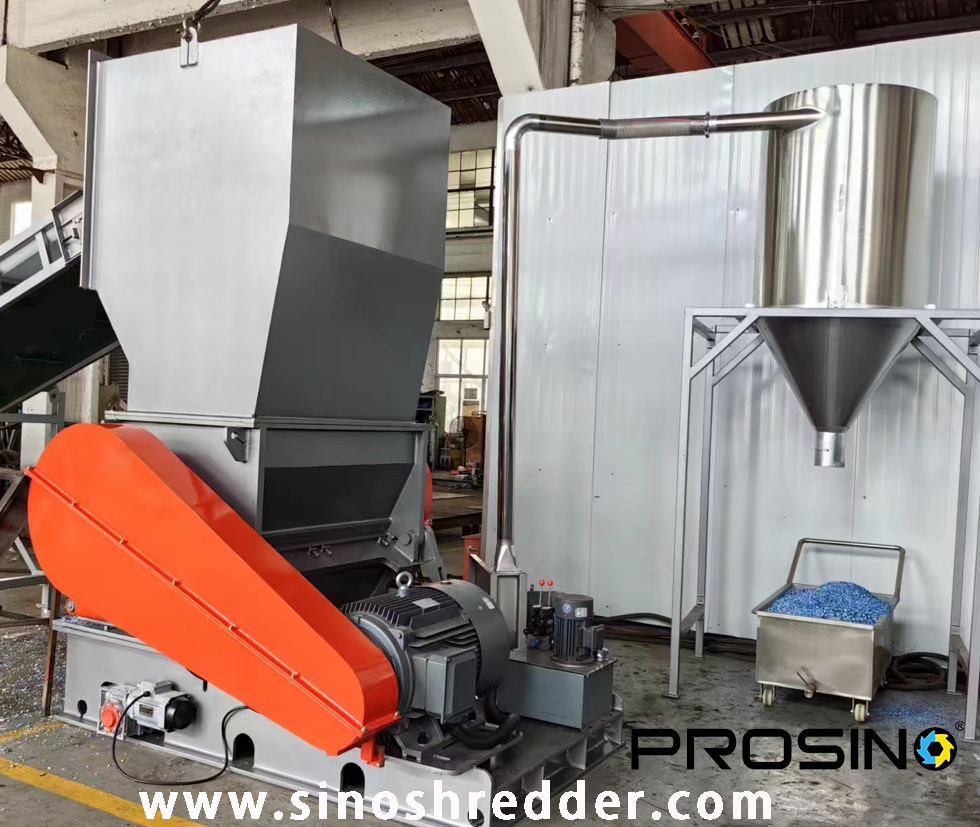
How it works
- A blower fan conveys particles through pipelines.
- A cyclone separator spins air and material.
- Granules drop into bags or bins while air exits through filters.
Best for
- Plastic granules
- Film flakes
- Lightweight shredded materials
- Continuous operation lines
Advantages
✅ Automatic conveying
✅ Cleaner working environment
✅ Reduced dust pollution
✅ Continuous discharge
✅ Improved operator safety
Limitations
❌ Requires blower power
❌ Slightly higher investment
👉 This is the standard configuration for most plastic granulating systems.
🌀 3. Screw Conveyor Collection System

How it works
- Shredded particles (such as shredded wood pallets) drop into a horizontal screw conveyor.
- Material is mechanically transported to storage or next processing step.
Best for
- Heavy materials
- Metal scraps
- Dense plastic regrind
- Controlled feeding applications
Advantages
✅ Stable conveying
✅ Works with heavy particles
✅ Dust controlled
✅ Accurate feeding to next machine
Limitations
❌ More mechanical wear
❌ Not ideal for ultra-light film flakes
⭐ Quick Selection Guide
Production Size | Recommended Collection |
|---|---|
Small workshop | Collection bin |
Medium recycling line | Cyclone collecting system ⭐ |
Heavy material processing | Screw conveyor |
✅ Industry Tip (Most Recommended):
For plastic shredding or granulation lines, a Cyclone Collecting System + Blower + Dust Filter offers the best balance of cost, cleanliness, and automation.
Quick link:
✅ Get Quote | Download Brochure | Ask Engineer | Video Demo
Pallet recycling is one of the most profitable and sustainable businesses in the U.S. logistics and waste management sector. With billions of pallets used each year and strong demand for affordable, reusable pallets, recycling offers multiple income opportunities while supporting environmental goals.
Modern equipment like the PROSINO wood pallet shredder and SINOBALER wood chips bagging baler allows recyclers to process damaged or unusable pallets efficiently, turning them into marketable products like wood chips for biomass, animal bedding, or landscaping.
📦 1. Buying & Reselling Recycled Pallets
One of the core profit methods is acquiring used pallets (often free or low cost) and then:
- Inspecting and grading them
- Repairing or refurbishing damaged components
- Reselling them at a higher price
Many companies will pay for usable pallets because recycling costs less than buying new ones. Standard sizes like 48x40″ typically fetch higher prices and are easier to sell.
💰 Profit Drivers
- Pallets can often be picked up free from warehouses
- Refurbished pallets sell at significant markups
- Standard pallets have excellent resale demand
🔨 2. Value from Refurbishment & Repair
Refurbishment adds direct value:
- Replacing broken boards
- Resetting nails
- Stabilizing structure
Refurbishment often accounts for 60% of pallet business revenue, with net margins ranging around $4–$8+ per pallet depending on condition and grade.
🪵 3. Processing Damaged Pallets with PROSINO Wood Pallet Shredder
Not all pallets can be repaired. Using PROSINO wood pallet shredder:
- Shreds broken or low-quality pallets into wood chips or biomass material
- Reduces storage and disposal costs
- Creates a secondary revenue stream

📦 4. Packaging Wood Chips with SINOBALER Wood Chips Bagging Baler
Once wood chips are produced, packaging efficiently is key. The SINOBALER wood chips bagging baler:
- Compresses wood chips into uniform, easy-to-handle bags
- Reduces transportation and storage costs
- Improves product appearance and marketability for mulch, animal bedding, or biomass fuel
✅ This combination of shredding and bagging maximizes revenue from every pallet, even those that cannot be resold.

📍 5. Pickup & Removal Services
Many pallet recyclers generate profit by offering pickup services — collecting pallets that businesses otherwise pay to dispose of:
- Small loads (under 100 pallets): pickup fees
- Large batches: free pickup plus resale of pallets
- Odd-size or specialty pallets: premium fees
This adds a service revenue stream on top of resale profits.
📈 6. Market Conditions Fuel Profitability
The U.S. pallet recycling market benefits from:
- High pallet usage: An estimated 7+ billion pallets in circulation nationwide
- Strong resale demand: Recycled pallets are widely needed by warehouses, manufacturers, and logistics businesses
- Growing sustainability focus: Businesses prefer reused pallets to reduce waste and carbon footprint
These conditions create solid pricing power and repeat demand for recycled pallets.
💡 Real-World Examples
- Some businesses generate hundreds of thousands of dollars annually from pallet recycling, even starting with low overhead.
- Standard 48×40 pallets are easier to source and resell, often yielding higher margins.
- Using tools like the PROSINO wood pallet shredder and SINOBALER wood chips bagging baler, recyclers can turn unusable pallets into salable, bagged wood chips, creating multiple profit streams.
📊 Revenue Streams in Pallet Recycling
Revenue Stream | Typical Profit Contribution |
|---|---|
Refurbished pallet resale | Core profitability driver |
Pickup & removal services | Extra service income |
Shredded & bagged wood chips (PROSINO + SINOBALER) | Secondary revenue |
Value-added services (heat treatment, custom specs) | Higher premiums |
🪵 Why Pallet Recycling Is a Profitable Business
✔ Low starting costs — pallets can often be sourced free
✔ Multiple income streams — resale, services, secondary products
✔ PROSINO shredder + SINOBALER bagging baler maximizes revenue from unusable pallets
✔ Rising demand — broad use across industries
✔ Environmental value — supports circular economy goals
📌 Summary: How Pallet Recycling Makes Profit in the USA
In the U.S., pallet recycling turns waste into income by:
- Collecting used pallets for little or no cost
- Repairing and refurbishing them for resale
- Shredding damaged pallets with PROSINO wood pallet shredder
- Bagging wood chips efficiently with SINOBALER wood chips bagging baler
- Offering pickup services that add revenue
- Leveraging strong market demand for recycled pallets
This combination builds a profitable, sustainable business model with recurring revenue opportunities.
✅ Get Quote | Download Brochure | Ask Engineer | Video Demo
Wood pallets are widely used in logistics, warehouses, and shipping. Over time, pallets get damaged or worn out, creating a disposal challenge. Proper recycling can:
- Reduce landfill waste
- Recover valuable wood material
- Cut disposal costs
- Support sustainability goals
Below, we answer the most frequently asked questions about wood pallet recycling, including feeding methods, machinery, and safety tips.
🟦 FAQ Section
1️⃣ Can wood pallets be recycled?
Yes. Most wooden pallets can be recycled or repurposed. Pallets made of untreated wood are ideal for shredding, chipping, or baling. Even pallets with minor damage can be processed to recover wood for mulch, biomass, or industrial wood products.
2️⃣ What is the best way to recycle wood pallets?
The best method depends on your volume and facility layout:
- Small volume: Manual dismantling and stacking for reuse or local recycling.
- Medium volume: Shredding pallets with a wood pallet shredder for wood chips.
- High volume: Combining pallet shredders, balers, and conveyors for a fully automated recycling line.
3️⃣ Can wood pallets be shredded or chipped?
Yes. Wood pallet shredders and pallet chipper machines are commonly used. Shredded pallets can be converted into:
- Wood chips for fuel or biomass
- Mulch for landscaping
- Raw material for particle boards
Shredding improves handling, reduces storage space, and makes transportation more efficient.
4️⃣ Can nails and metal parts be recycled along with pallets?
Most industrial shredders can handle nails and metal fasteners. After shredding, magnets or metal separators are used to extract metals before sending the wood material for further processing.
5️⃣ Should I sort pallets before recycling?
Yes. Sorting helps improve machine efficiency and safety:
- Remove plastic wraps or straps
- Separate pallets by size if possible
- Identify pallets with excessive moisture or contamination
Proper sorting reduces machine jams and increases output quality.
6️⃣ What machines are used to recycle wood pallets?
Common pallet recycling machinery includes:
- Wood pallet shredders – break pallets into wood chips or small pieces
- Magnetic metal separator systems – efficiently remove nails, screws, and other metal contaminants from the shredded wood chips to ensure clean, safe, and high-quality material.
- Conveyor systems (optional)– automate the transfer of shredded wood pallets or transport wood chips directly into balers for faster and more efficient processing.
- Wood granulators (optional)– further granulate shredded woods into uniform sizes for mulch, animal bedding, biomass fuel/pellets, and composite wood products.
- Hydraulic baling and bagging balers (optional)– compress granulated wood chips into dense, uniform bales and package them in bags for easier handling and direct sale.
- Bag sealing machines (optional)– securely seal compressed wood chip bales in plastic bags for safe storage, transport, and direct sale.

7️⃣ How much volume or weight can a wood pallet shredder handle?
It varies by machine:
- Wood pallet shredders: 20-30 pallets/hour
- Single shaft shredders: 5–10 tons/day
- Double shaft shredders: 10+ tons/day
Always match machine capacity with daily pallet volume to ensure efficiency and avoid downtime.
8️⃣ Can broken pallets be reused instead of recycled?
Yes, pallets in good enough condition can be repaired and reused. However, for heavily damaged pallets, shredding for recycling is more practical and environmentally friendly.
9️⃣ What safety precautions are needed for pallet recycling?
Operator safety is critical:
- Wear PPE (gloves, helmets)
- Never reach into a shredder during operation
- Keep feeding area clear of debris
- Train operators on safe feeding methods (manual, conveyor)
- Follow local safety and machine guidelines
Ready to Recycle Wood Pallets Efficiently?
PROSINO provides customized pallet recycling solutions, including shredders, metal separator, and conveyor systems tailored to your facility’s needs.
Yes. The PROSINO wood pallet shredder is specifically designed to process used wooden pallets containing nails, screws, and metal fasteners commonly found in logistics and recycling applications.
Why PROSINO Wood Pallet Shredder Can Handle Nails?
1. Built for Contaminated Pallets
Wood pallets almost always contain steel nails. Industrial pallet shredders are engineered to shred nailed pallets directly, unlike standard wood chippers that are easily damaged by metal.
Heavy-duty pallet shredders use strong cutting systems and high torque to tear through pallet structures while tolerating embedded metal parts.
2. Robust Cutting Rotor & Blades
The PROSINO pallet shredder features:
- Heavy-duty rotating cutting blades
- Stationary counter knives for shearing action
- Reversible rotor design to protect the machine if overload occurs
These features allow the shredder to cut wood while surviving contact with nails during operation.
3. Nail Separation After Shredding
In pallet recycling lines, nails are normally removed after shredding, not before.
Industrial pallet shredders commonly:
- shred pallets together with nails
- automatically separate iron nails from wood chips using magnetic or metal separation systems
This improves efficiency and avoids manual pallet dismantling.
✔ Typical Materials Processed
PROSINO wood pallet shredder can handle:
- Wooden pallets with nails
- Broken logistics pallets
- Construction formwork
- Waste furniture wood
- Mixed wood scrap with metal fasteners
⚠ Important Operating Notes
Even though nails are acceptable:
- Large metal pieces (steel plates, tools, bolts) should be avoided
- Periodic blade inspection is recommended
- Magnetic separator is recommended for clean output material
✅ Conclusion
Yes — PROSINO wood pallet shredders are designed to shred nailed pallets directly, making them ideal for pallet recycling plants, waste wood recovery centers, and biomass preparation systems.
For specific material, we will firstly choose the right type of shredders for options. Based on original material size, different capacity level and output product size requirement, we will finally determine which model machine is the best suitable for your specific material.
To maximize shredding efficiency, whether you're shredding plastic, rubber, cardboard or other materials, consider the following tips:
- Use a high-quality shredder: Invest in a reliable and powerful shredder that can handle the volume and type of material you need to shred. Look for a shredder with a high sheet capacity and a strong motor to ensure efficient shredding.
- Sort and organize materials: Sort your materials before shredding them. Remove non-shreddable items. Organize the materials in batches to streamline the shredding process and prevent jams.
- Feed materials consistently: Feed the materials into the shredder consistently and in a controlled manner. Avoid overloading the shredder, as it may lead to inefficiency or jams. Follow the manufacturer's guidelines for the recommended sheet capacity and feeding speed.
- Lubricate the shredder: Regularly lubricate your shredder to maintain its optimal performance. Consult the manufacturer's instructions for the appropriate lubrication method and schedule. Lubrication helps to reduce friction and prolong the life of the shredder.
- Maintain a clean work environment: Keep your shredding area clean and free from debris. Remove shredded materials regularly and dispose of them securely. A clutter-free workspace reduces the risk of accidents and helps maintain efficiency.
- Shred in batches: If you have a large volume of materials to shred, divide them into manageable batches. Shredding in smaller increments reduces the strain on the shredder and allows for more efficient processing.
- Follow manufacturer guidelines: Always refer to the manufacturer's instructions and guidelines specific to your shredder model. They may provide additional tips for maximizing shredding efficiency and offer maintenance recommendations to keep your shredder running smoothly.
By implementing these strategies, you can optimize shredding efficiency and maintain the performance of your shredder over time.
Operating shredders involves potential risks, and implementing proper safety measures is crucial to ensure the well-being of operators and prevent accidents. Here are key safety measures that should be taken during shredder operation:
1. Training and Familiarization: Ensure that operators are adequately trained on the safe operation of the specific shredder model they are working with. Familiarity with the equipment's controls and safety features is essential.
2. Use of Personal Protective Equipment(PPE): Mandate the use of appropriate PPE, including safety glasses, gloves, hearing protection, and steel-toed boots, to protect against potential hazards.
3. Emergency Stops: Clearly mark and ensure easy access to emergency stop buttons. Operators should be trained to use these stops in case of any immediate danger or malfunction.
4. Machine Guards and Barriers: Install machine guards and barriers to prevent accidental contact with moving parts. Ensure that these guards are in place and functioning properly during operation.
5. Lockout/Tagout Procedures: Implement lockout/tagout procedures to ensure that equipment is safely shut down and de-energized before any maintenance or cleaning activities.
6. Warning Signs and Labels: Clearly label potential hazards and provide warning signs to alert operators about specific risks associated with the shredder.
7. Material Inspection: Thoroughly inspect materials before feeding them into the shredder. Remove any objects that could cause jams, blockages, or damage to the machine.
8. Proper Loading Techniques: Train operators on the correct loading techniques to prevent overloading or uneven feeding, which can lead to operational issues and safety hazards.
9. Secure Working Area: Ensure that the working area around the shredder is kept clear of obstacles and is well-lit. This minimizes the risk of trips, falls, or collisions.
By implementing these safety measures and fostering a safety-conscious work environment, the risk of accidents during shredder operation can be significantly reduced. Regular safety training and adherence to established protocols are key components of a successful safety program.
We provide below assistance during the installation and setup phases:
1. Documentation and Manuals: we can provide comprehensive installation manuals and documentation if the equipment is required. Clear and detailed instructions can facilitate the setup process.
2. Online Resource: video tutorials or user guides are available to assist with the installation if the equipment is required.
3. On-Site Support: For complex machine installation and commissioning, we will send engineer to your site to conduct it. Service charge together with travelling expenses will be quoted additionally after installation location is confirmed.
4. Customer Support Contacts: we will put you into direct contact with an English-spoken senior engineer by WhatsApp or WeChat after the delivery, so that he can provide prompt support once you need his advice in terms of setting up, operation, or even trouble shooting.
We can tailor the equipment to meet specific application requirements. This might include modifications to the cutting mechanism, feed systems, or other features to suit unique materials or processes. If you have existing material handling or processing systems, check if our shredder or granulator can be customized for smooth integration with these systems.
Shredding and granulating are both size reduction processes used to break down materials into smaller pieces, but they differ in the final size and characteristics of the resulting particles.
Shredding:
-
Particle Size: Shredding typically produces larger particle sizes compared to granulating. The shredded material may have irregular shapes and varying sizes.
-
Purpose: Shredding is often employed to reduce the size of large objects or materials into smaller, manageable pieces. The goal is to break down materials into more manageable sizes for further processing or disposal.
-
Applications: Shredding is commonly used for materials such as paper, cardboard, plastic, wood, and rubber. Industrial shredders are often used in recycling operations.
-
Output: Shredded materials may have a wide range of particle sizes, and the output is usually a mix of differently sized pieces.
Granulating:
-
Particle Size: Granulating results in smaller and more uniform particle sizes compared to shredding. The particles are often of a specific and controlled size.
-
Purpose: Granulating is often used when a consistent and defined particle size is required. The process is suitable for producing granules that can be used in manufacturing or further processing.
-
Applications: Granulation is common in the plastics industry, where plastic materials are processed into uniform granules for molding or extrusion. It is also used in pharmaceuticals and food processing.
-
Output: The output of a granulator is typically more uniform, with particles of a specified size range. This consistency is important in applications where the size of the particles affects the end product's quality.
In summary, the primary difference between shredding and granulating lies in the size and uniformity of the final particles. Shredding is often used for coarse size reduction, breaking down large materials into smaller pieces, while granulating is employed when a more uniform and controlled particle size is required, suitable for specific manufacturing processes.
Follow us


Leave a message
SINOSHREDDER PRIVACY POLICY
We collect information from you when you fill out an inquiry or contact form. When submitting the form on our site, you may be asked to enter your name and contact details such as: e-mail address, mailing address and/or phone number, etc. Alternatively, you can choose not to complete our forms and visit our site anonymously. Any of the information we collect from you may be used to help us to better respond to your individual needs, and/or enable us to more effectively respond to your customer service requests and support needs. The email address you provided may also be used to send you information and updates pertaining to your inquiry and/or order, in addition to receiving occasional company news, updates, related product or service information, etc.
PROSINO SHREDDER does not sell, trade, or otherwise transfer to outside parties your personally identifiable information. This does not include trusted third parties who assist us in operating our website, conducting our business, or servicing you, so long as those parties agree to keep this information confidential. We may also release your information when we believe release is appropriate to comply with the law, enforce our site policies, or protect ours or others rights, property, or safety.
By using our site, you consent to our online privacy policy. If we decide to change our privacy policy, we will post those changes on this page. If you have any questions or concerns regarding our privacy policy, please e-mail prosino@sinobaler.com or mail your question to us at 1206 Yinzhou Shanghui Nan Lou, 1299 Yinxian Avenue, Yinzhou District, Ningbo 315192, P.R. China.
EXTERNAL LINKS & DISCLAIMER
Our web site has links to many other organizations with their permission. Upon leaving the SINOSHREDDER web site, you are subject to the privacy policy of the new site which are not under our control. PROSINO SHREDDER is not responsible for the content of any linked site or any link contained in a linked site. These links are provided to you as a service for you to better understand the different business relationships that SINOSHREDDER has established, and/or to point the reader to other possible relevant resources.